Traffic signs
Reading Sign Shapes and Colours
Sample content — expert review in progress. These lessons and questions are drafted in-house against official sources and are still working through verification. Nothing here is marked verified or published yet.
Shape tells you the job
Every road sign in Ontario has a shape that hints at what it does before you even read the words. A stop sign is always an eight-sided shape called an octagon — no other sign uses that shape, so you can recognize it even half-covered in snow or seen from an angle. Diamond-shaped signs warn you about something ahead, like a curve or a crossing. Rectangles usually give you a rule to follow, like a speed limit.
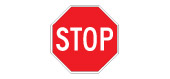
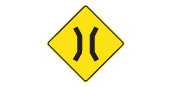
© King's Printer for Ontario, 2026 — Official MTO Driver's Handbook
Colour adds meaning
Colour backs up the shape. Red means stop or “don't do this” — stop signs, yield signs, and no-entry signs are red. Yellow means caution — warning signs about curves, crossings, or hazards ahead are yellow. White signs with black text usually set a rule, like speed limits or one-way streets. Green and blue signs give directions or information, like exit numbers or where to find a hospital.
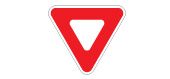
© King's Printer for Ontario, 2026 — Official MTO Driver's Handbook
Lines on the road talk too
The lines painted on the pavement follow the same idea. A solid yellow line down the centre of the road means you can't pass on that side because you can't see far enough ahead safely. A broken (dashed) line means passing is allowed when it's safe. Two solid lines together mean passing is not allowed from either direction.